Buying Once or Renting for a While?
Buying once or renting for a while? Weigh use, storage, upkeep and flexibility to choose an option that fits your plans without paying for access you do not need.
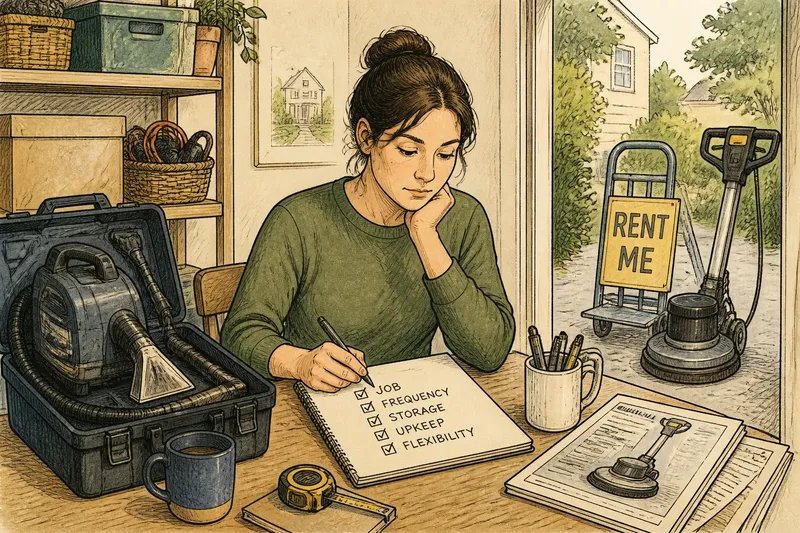
You need a carpet cleaner for a stubborn mark, a projector for an occasional gathering, or a specialist tool for a one-off job. Buying once or renting for a while comes down to more than the item’s price: the choice also affects where it lives, who maintains it and how easily you can change plans. Work through those questions in order, using the likely pattern of your own use rather than an imagined perfect routine.
What job does the item need to do?
Start by describing the task, not the product. “I need to clean the sofa before guests arrive” is more useful than “I should own an upholstery cleaner”. A clear job helps you avoid paying for features or capacity you may never use.
Write down the result you need, the place you will use the item and any constraints. A projector for a small, dim room has different requirements from one intended for a bright hall. A ladder needed for indoor decorating may not suit outdoor ground or the task’s reach. If you are unsure what the job requires, ask a knowledgeable hire-shop employee or a qualified professional rather than choosing a tool by appearance alone.
Next, consider whether a simpler substitute could do the job. Borrowing from someone you know, using a service or adapting an item you already have may be sensible. These are not automatically better: borrowing still involves arranging collection and return, while a service may not suit your schedule. Treat them as genuine options before settling on a purchase or rental.
How often will you really use it?
Estimate use over a period that makes sense for the item and your plans. Include occasions you can name, such as a regular hobby session or a booked renovation task. Leave out vague intentions like “I might get into gardening” unless you have already made room in your routine for it.
Frequency is only part of the picture. A garment steamer used briefly before work may be easy to keep at home, while a bulky floor polisher used for a whole afternoon may create a storage and handling burden each time. Consider the length of each use, how predictable it is and whether the item must be ready at short notice.
Then compare repeated access with a one-off rental. Buying may make sense if the item will be used often enough that having it available matters, especially when borrowing or hiring would interrupt the activity. Renting may fit better when the need is tied to a particular event, a single project or an interest you are still exploring. Do not treat a rough break-even calculation as a verdict: access, convenience and responsibility also have value.
Where will it live between uses?
Choose a storage place before you buy. Measure the usable space, not the empty-looking corner in your mind: account for doors, shelves, other belongings and the route you need to carry the item through. A compact case can still be awkward if it must be lifted over boxes every time.
Think about the effect of storing it there. Will it block a cupboard you use often, need a dry environment, or require parts to be kept together? If it has accessories, check that they can be stored without getting lost. A neatly boxed item can behave like a book on a shelf; a large machine may behave more like a chair left in a narrow hallway, claiming space even when no one is using it.
Renting shifts this question rather than removing it. You still need a safe place for the item during the hire period, and you may need to transport it to and from the lender. If collection is difficult, ask about delivery or local availability before deciding. If the item is needed repeatedly but only for brief bursts, keeping it at home may be worth the space; if it would sit unused for long stretches, storage can become part of its real cost.
Who handles upkeep and what happens if it fails?
Ownership means taking responsibility for keeping an item ready to use. That may involve cleaning, replacing consumables, storing it properly or arranging repairs. Look at the maker’s care guidance and consider whether the routine is manageable, not merely whether the item seems sturdy in a shop.
Rental usually shifts some maintenance responsibility to the provider, but it does not make every practical concern disappear. Check what condition the item is supplied in, what support is available if it stops working and what you are expected to do before returning it. The relevant terms can vary by lender and item, so read the hire conditions and manufacturer’s instructions where they apply.
Also ask how much control you want over timing. A rented item may need to be returned by a set time, which can be awkward if a task runs late. Owning it gives you access on your own schedule, but a breakdown may leave you finding a repair or replacement. Consider which inconvenience is easier to absorb in the situation you actually expect.
How much flexibility do your plans need?
Some purchases suit a stable routine; others tie you to a plan you may soon change. If you are moving house, trying a new hobby or uncertain about the project’s scope, short-term access can keep your options open. Renting lets you learn whether a particular type of item suits you before making room for it permanently.
Ownership can offer a different kind of flexibility: the item is available whenever you decide to use it, and you can learn its quirks over time. That matters for a hobby or recurring task where setup and familiarity make the activity easier to begin. The question is not simply “Which is more flexible?” but “Which kind of flexibility matters here: freedom to change direction, or freedom to use it whenever I want?”
Say you are planning a small garden project but have not decided whether it will become a regular hobby. You could rent a suitable tool for the first clearly defined task, note whether you use it again and whether storage would be convenient, then decide about ownership later. The expected observable result is a decision informed by actual use and handling, rather than a purchase based only on an optimistic plan.
What questions help settle the choice?
When is renting better than buying?
Renting can suit a task that is unusual, time-limited or uncertain, especially when the item takes up substantial space or needs care you would rather not manage. It is also useful when trying a type of equipment before deciding whether it belongs in your routine.
When is buying better than renting?
Buying can suit repeated use, a need for immediate access or an activity where learning one familiar item is useful. It is more persuasive if you already know where it will live and are willing to handle its upkeep.
Should I count convenience as part of the cost?
Yes. Include the time and effort involved in collecting, returning, storing and preparing the item, as well as any interruption caused by limited availability. Convenience is personal: a nearby hire shop may be easy for one person and impractical for another.
What if I am still unsure?
Look for a reversible choice, such as borrowing or renting once, provided the arrangement is clear and safe for the task. Afterward, notice whether you wanted the item again, whether access felt inconvenient and whether its storage and upkeep would fit your home.
How can you make the decision in order?
Use these questions as a short decision sequence. Give each one an honest answer before moving to the next:
- Name the job. Write down the result you need, where you will use the item and any requirements that matter.
- List plausible uses. Count only occasions you can reasonably expect, and note whether access must be immediate or can be booked.
- Check storage and transport. Identify a real place for the item and consider how you would collect, carry and return it.
- Check the upkeep. Find out what cleaning, supplies, care or repair responsibility comes with each option.
- Compare the terms and total commitment. Look beyond the headline purchase or hire charge to relevant accessories, delivery, deposits, return conditions and the time involved.
- Choose the least burdensome fit. Buy if regular access and a workable home for the item matter most; rent if the need is limited or uncertain and the hire arrangement suits the task.
If the answers pull in different directions, you do not have to force a permanent choice. A short rental can resolve uncertainty, while a purchase can remain a future option if the item becomes part of your routine. The point is to choose deliberately rather than treating ownership as proof of commitment or renting as wasted money.
What should you remember before committing?
Buying once or renting for a while is a decision about access, not a test of how organised or resourceful you are. Revisit it if your home, schedule or plans change. An item that made sense to own for one season may later be easier to hire, and something you once rented may earn a permanent place through repeated use.
Before paying or signing, check the precise item, included parts and return expectations. For anything that could affect personal safety or property, use only equipment appropriate to the task and follow its instructions; get qualified help where the work calls for it. Keep the decision grounded in the job you have, the space you can offer and the responsibility you are willing to take on. That is a more reliable basis for buying once or renting for a while than the idea that one option is always the sensible one.