Why a Habit Sticks to a Cue
Why a habit sticks to a cue depends on a dependable prompt. Learn to pair an everyday signal with a manageable action so it is easier to begin.

You put your mug beside the kettle, then remember the vitamins only after sitting down. Why a habit sticks to a cue often comes down to that small link between a familiar moment and an action you want to remember.
What does a cue do for a habit?
A cue is a signal that tells you when to begin. It might be an event, such as closing your laptop after work, or a place, such as the kitchen counter where you keep a notebook. The routine is the action; the cue gives it a recognisable starting point.
Without a cue, you must remember both that you want to do something and when to start. When your attention is elsewhere, that can be easy to miss. A cue lets you decide in advance: when this signal appears, I will do that action.
A cue is like a door handle: it gives your hand a familiar place to start, but it does not carry you through the door. The routine still needs to suit the moment and be manageable enough to begin.
Why does a consistent cue help a habit stick?
Pairing the same prompt with the same action helps you recognise the connection. At first, you may need to remember what the cue means. With repetition, the signal can bring the routine to mind with less deliberate effort. It is a learned association, not a switch that makes every action automatic.
Consistency matters more than choosing a clever signal. If you stretch after brushing your teeth, that repeated event gives the action a clear place in your routine. By contrast, “when I have a spare moment” can mean many things, so it may not prompt you to start.
A cue can also reduce the need to scan your day for an ideal opening. You have already chosen a moment to look for. That does not remove every decision, but it can make the routine easier to recall.
How can you choose a cue that fits your day?
Start with an action you genuinely want to do. Then look for a moment that already occurs, is easy to recognise and leaves enough room to begin. A cue tied to a fragile schedule may disappear when plans change, so consider whether the signal is dependable in your ordinary routine.
- Existing action: Check whether you can name the action that comes just before your routine. If you can, try that pairing; if not, choose a clearer event instead of a broad time such as “around lunchtime”.
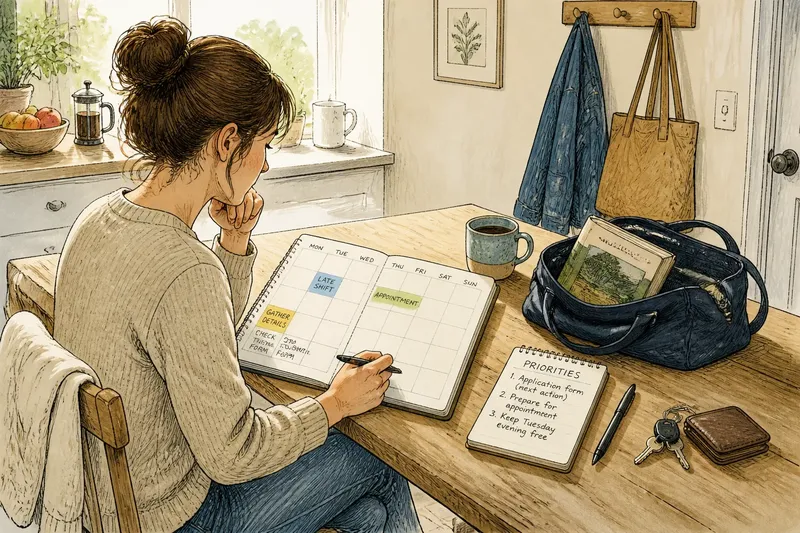
- Visible object or place: Check whether you will see the object before you need to act. If a library book beside your bag catches your eye before you leave, use it as a prompt; if it is hidden or out of your path, move it or choose another cue.
- Recurring transition: Check whether finishing breakfast, arriving home or shutting down your work computer happens reliably enough. If one transition fits most days, use it; if it often disappears, choose a more dependable event.
- Surroundings: Check whether the prompt is visible where the action begins. If a notebook on the kitchen counter catches your attention, keep it there; if it is tucked in a drawer, move it into view or use a different signal.
- Practical fit: Check whether the action’s tools and setting are available at the cue. If a pen and clear surface are nearby, begin the writing routine there; if not, shorten the action or choose a moment when those materials are ready.
- Schedule changes: Check whether the cue still occurs on days with a different routine. If it does, keep it; if it does not, choose a recurring event that suits those days or define a clear alternative.
Say you want to write in a journal and, in this invented situation, you already make tea after breakfast. The table is usually clear, but you keep leaving the journal in a bedroom drawer. First, move it beside the mug; next, decide to open it after sitting down with your tea; then write a few lines if time allows. The observable result is whether sitting down brings the journal to mind and the book is within reach. If you notice the cue but cannot write before leaving, keep the cue and make the routine smaller; if you do not see the journal, move it somewhere more visible.
What makes a habit cue unreliable?
A cue can sound dependable but be vague in practice. “When I have time” requires you to notice an open stretch and decide it is suitable. “After my last meeting” is more concrete, but it fails on days without meetings. Ask whether you can recognise the signal without interpreting your whole day.
Distance between the cue and action can create another obstacle. If you want to take a sketchbook on a walk, “after dinner” may leave several activities in between. Putting the sketchbook near your shoes and choosing “when I put on my shoes” may connect the prompt more directly to the action.
Several new actions attached to the same moment can crowd the cue. Keep the pairing simple at first, then decide whether another routine belongs there. Practical barriers matter too: if the action needs a pen and the pen is elsewhere, move it closer, shorten the task or choose a different cue.
What if your routine changes from day to day?
If you have changing shifts, caring responsibilities or an irregular commute, an event may work better than a fixed clock time. “After I unlock the front door” could suit a routine done at home, while “at six in the evening” may not fit every day. The cue still needs to lead naturally to the action.
If no single event appears reliably, choose a small number of clear alternatives. For instance, you might connect a short language practice to your first settled break at work, or to sitting down with a morning drink on a day off. Keep the action the same, and choose the alternative that matches the day you are having.
A missed cue does not mean the whole plan has failed. If a meeting runs late or you are away from your usual setting, resume at the next suitable moment. Notice what interrupted the link, then decide whether the cue or the action needs adjusting.
Which habit cue should you choose for common routines?
Can I attach a habit to something I already do?
Yes. Choose an action that reliably comes just before the routine, such as filling the kettle before reviewing your calendar. If that moment is usually rushed, choose a calmer event instead.
Is a phone reminder a good cue?
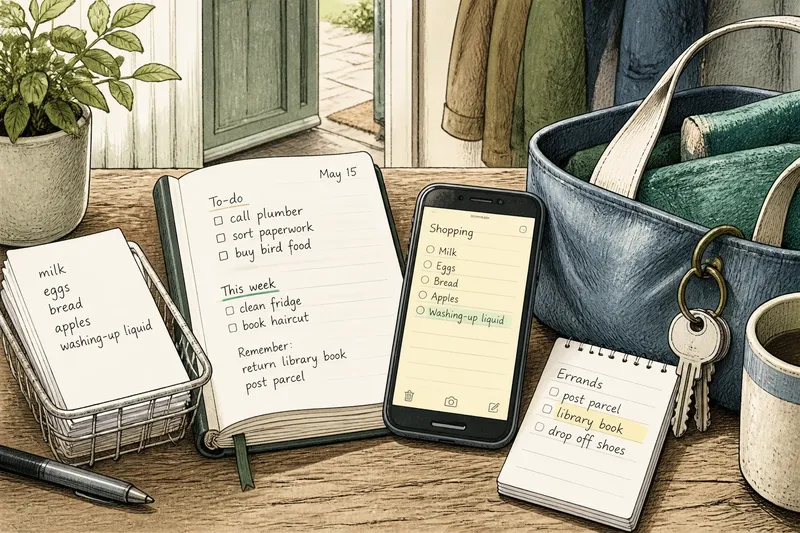
It can help when the routine needs a time-based prompt or you rarely encounter a useful physical signal. If you often dismiss alerts, pair the reminder with a visible object or an existing event, or try a different cue that you notice more readily.
Should the cue happen at the same time each day?
Not necessarily. A repeatable event can be more useful than an exact hour when your schedule varies. Choose a recognisable moment, place or action that you can actually use.
How can I tell whether my cue is working?
Notice whether the signal brings the routine to mind and whether you can begin without searching for the right moment. If you keep missing it, check whether you fail to notice the cue, lack time or need a tool; then change the visibility, size of the action or setting accordingly.
How should you adjust a cue that keeps slipping?
Find where the chain breaks. If you do not notice the cue, make it more visible or choose a clearer event. If you notice it but have no time, shorten the routine or select a less rushed moment. If you are ready but missing a tool, move the supplies closer.
Keep the cue specific enough to recognise without making it so rigid that ordinary changes make it unusable. If breakfast happens in different places, “after my first drink” might fit better than “after breakfast”, provided that moment is easy to identify.
Why a habit sticks to a cue is less mysterious when you look at the pairing: a familiar signal brings a manageable action to mind. Choose a prompt that belongs to your day, then adjust it if you repeatedly miss it. A useful final check is whether the cue leaves you close to the place, time and tools the action needs.